The big changes
Six big ocean changes matter for development, investment and public finance. For each, four questions: what it is, how likely the change is, what it would mean for people and economies, and what can be done about it.
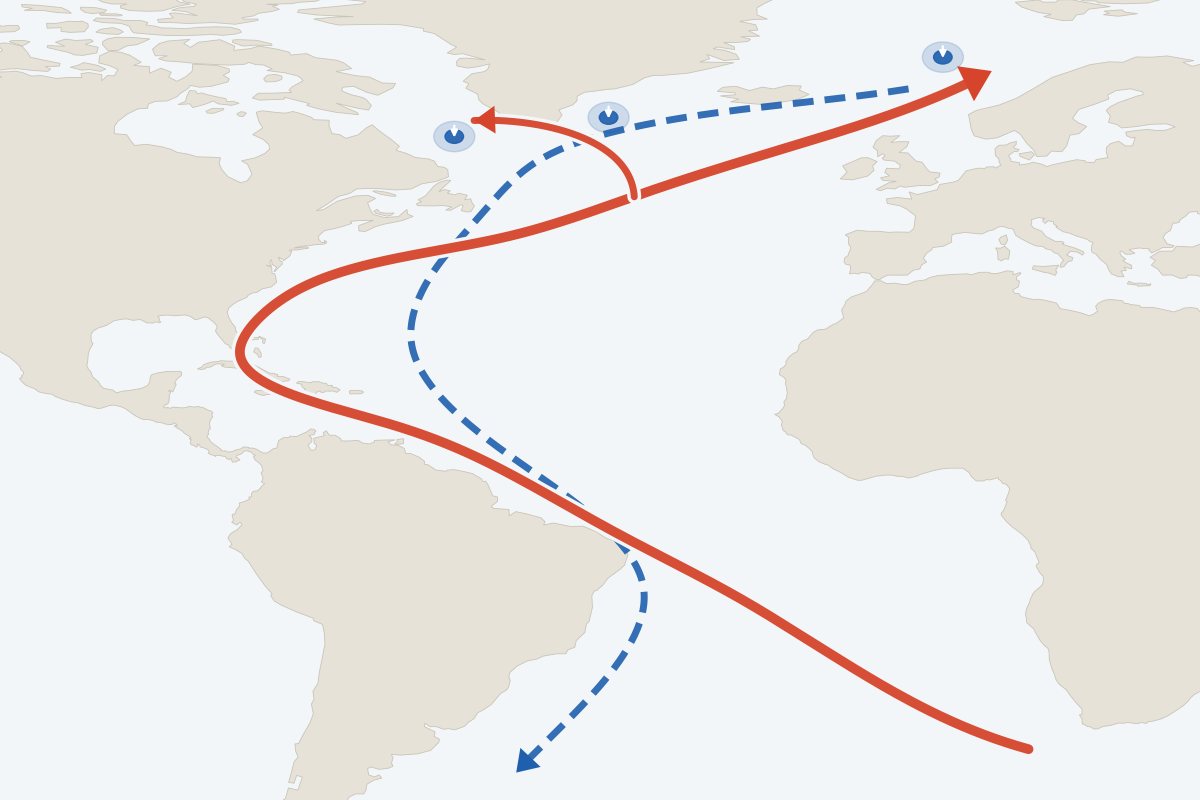
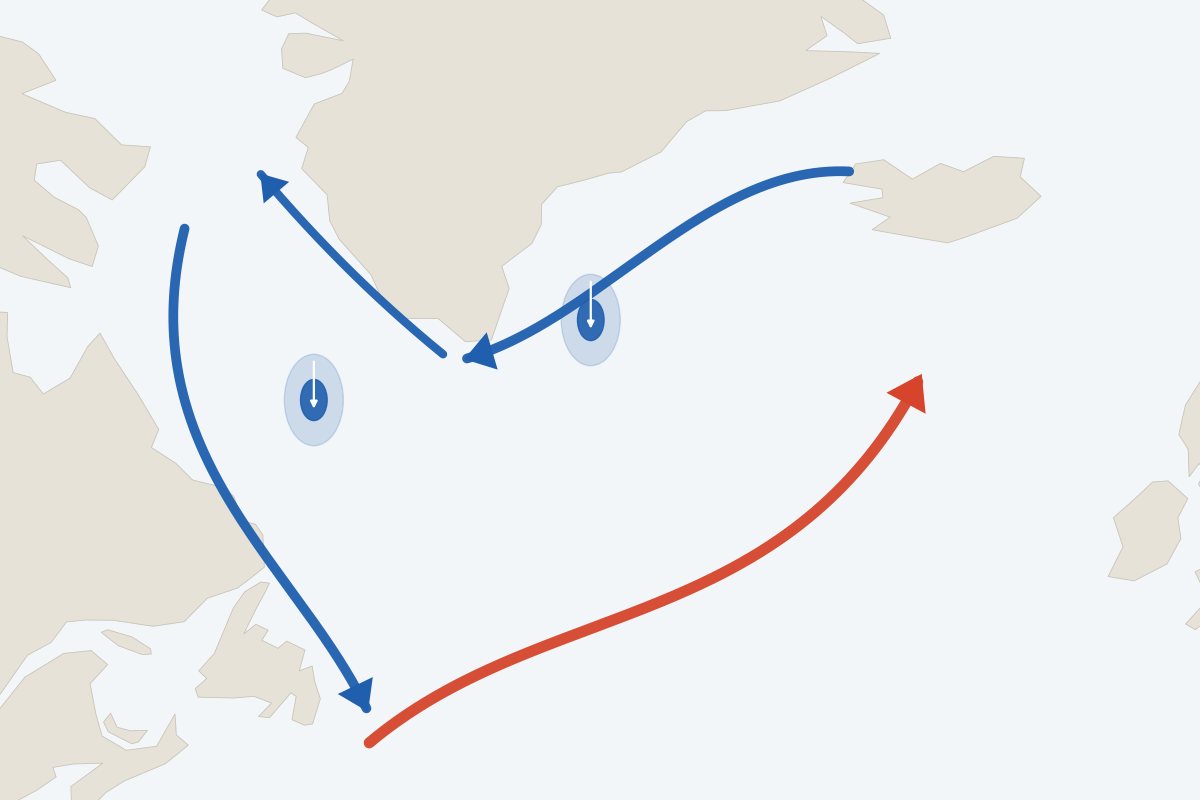
The Atlantic overturning circulation: warm water flows north near the surface (red), sinks in the far north and returns south at depth (blue). Atlantic circulation (AMOC)
- What is it?
- A system of currents that carries warm water north through the Atlantic and cold water back south at depth. It keeps northwest Europe mild and holds the tropical rain belts in place.
- How likely is it?
- Weakening this century is very likely. A collapse is a low-likelihood, high-impact risk: the IPCC has medium confidence it will not happen before 2100, and newer studies disagree.
- What would it mean?
- Much colder winters in northwest Europe, weaker monsoons in West Africa and South Asia, and faster sea-level rise on North Atlantic coasts, lasting centuries.
- What can be done?
- Limit both the amount and the speed of warming; stress-test long-lived investments against a collapse and favour measures that help either way.
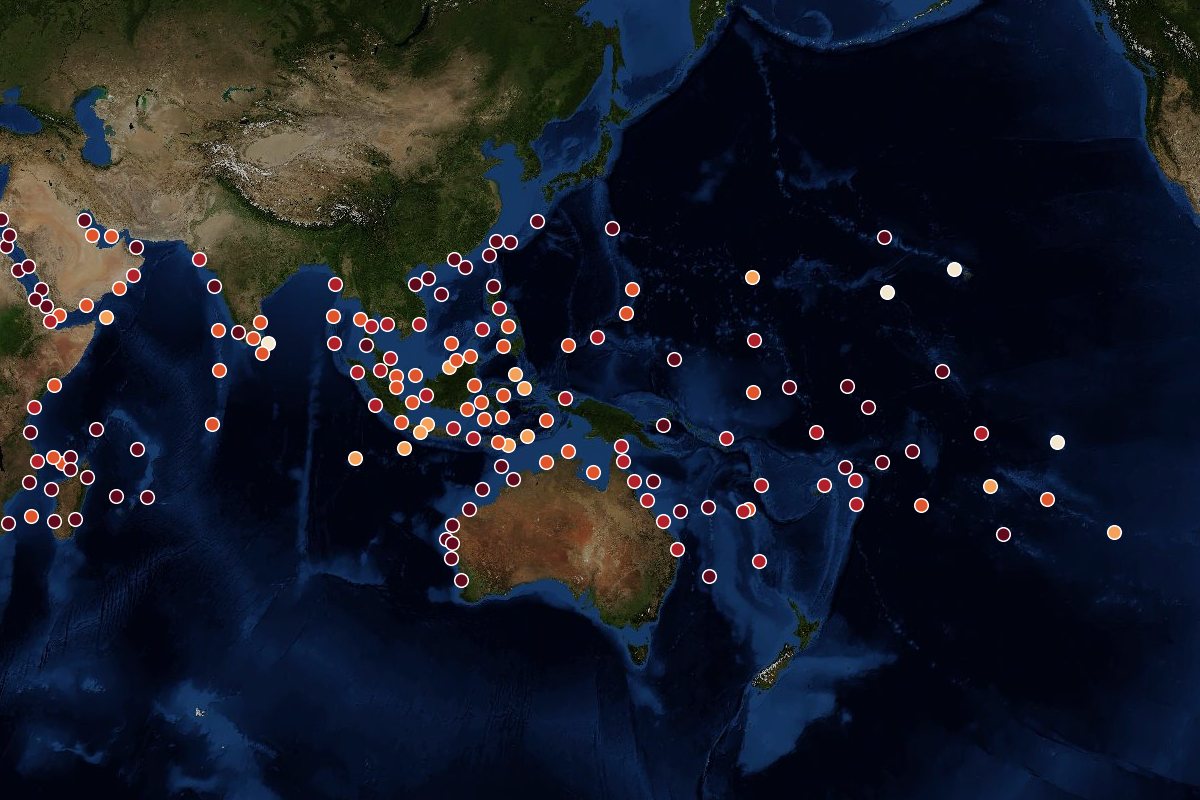
Peak heat stress at reef regions of the Indian Ocean and Pacific in 2023–2025; darker red means coral deaths were likely. Coral reefs and heat bleaching
- What is it?
- When the sea stays too hot for weeks, corals bleach and many die. Reefs now bleach more often than they can recover.
- How likely is it?
- Likely under way. Reefs are assessed as crossing their thermal tipping point, about 1.2°C of warming (range 1.0–1.5°C), and IUCN lists 96% of reef ecosystems as Critically Endangered.
- What would it mean?
- About a billion people live within 100 km of a reef. Losing reefs weakens natural flood defences and cuts fish and tourism income.
- What can be done?
- Bring warming back towards 1.2°C and below; protect the reefs most likely to survive and reduce local pressures; plan for weaker natural defences.
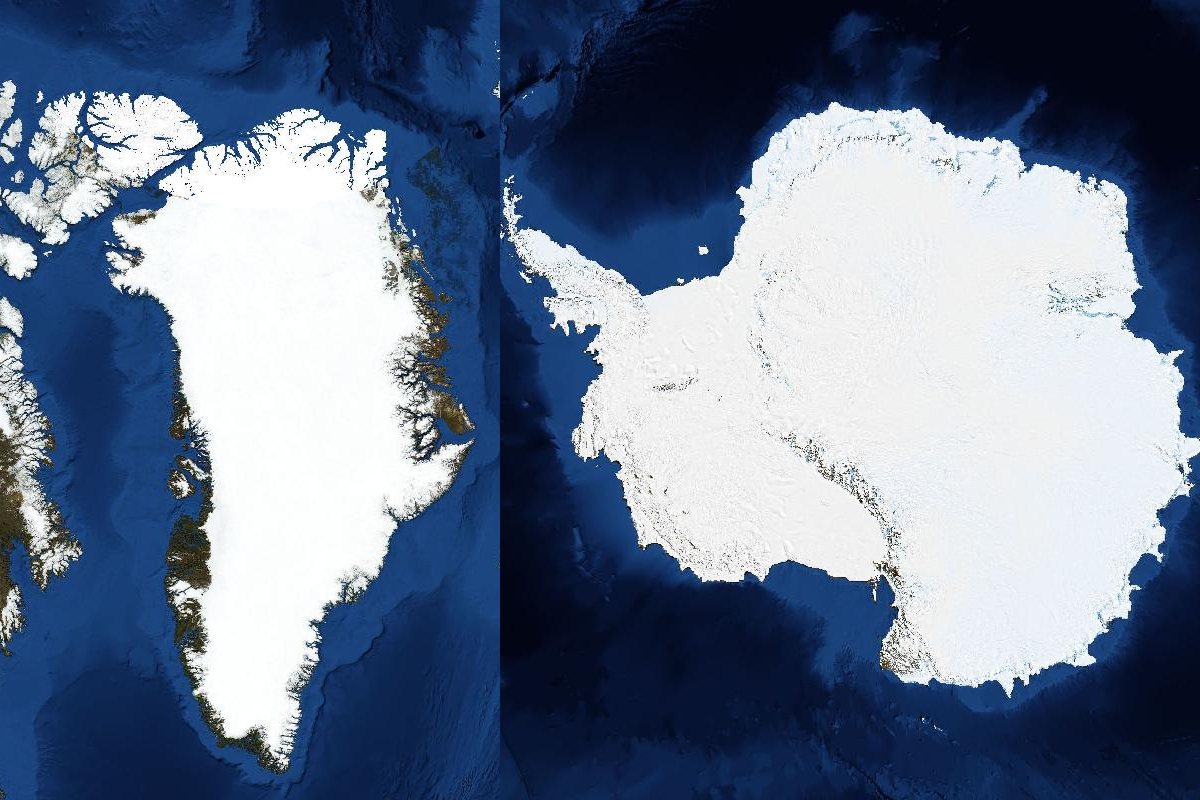
The Greenland and Antarctic ice sheets, which together hold enough ice to raise the sea by about 65 metres. Ice sheets and sea-level rise
- What is it?
- Greenland and Antarctica are losing ice four times faster than in the 1990s. Past a threshold, feedbacks keep an ice sheet shrinking even if warming stops.
- How likely is it?
- High confidence that both have tipping points, at risk since about 1°C of warming. Whether parts of West Antarctica have already passed one is disputed.
- What would it mean?
- Metres of sea-level rise, locked in over centuries to millennia. How fast it comes is the main uncertainty for coasts, deltas and islands.
- What can be done?
- Keep peak warming low and bring it back towards 1°C; test ports, defences and new districts against a high-end rise.
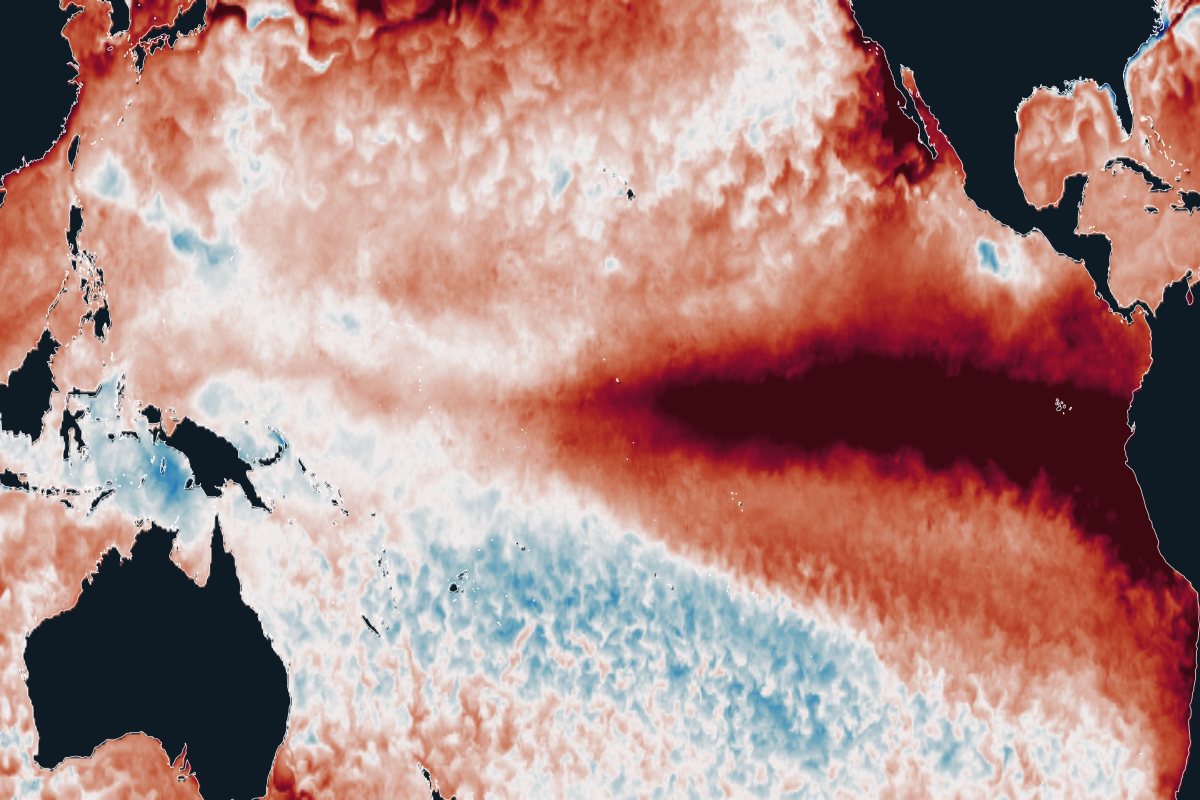
Sea temperature compared with normal across the Pacific in October 2026: the red tongue along the equator is El Niño. El Niño and the tropical Pacific
- What is it?
- A natural warming of the eastern tropical Pacific every few years that shifts rain and drought around the world. A strong El Niño is under way in 2026.
- How likely is it?
- El Niño will keep coming. Stronger extremes under warming are expected (medium confidence); a lasting El Niño-like Pacific is plausible but contested. It is not assessed as a tipping system.
- What would it mean?
- Droughts and floods across the tropics, food shortages, disease outbreaks and sharp falls in fish catches, with economic losses that last for years.
- What can be done?
- Act on seasonal forecasts with agreed triggers and pre-arranged finance; size reserves and insurance for stronger events. Earlier net zero limits the long-term shift.
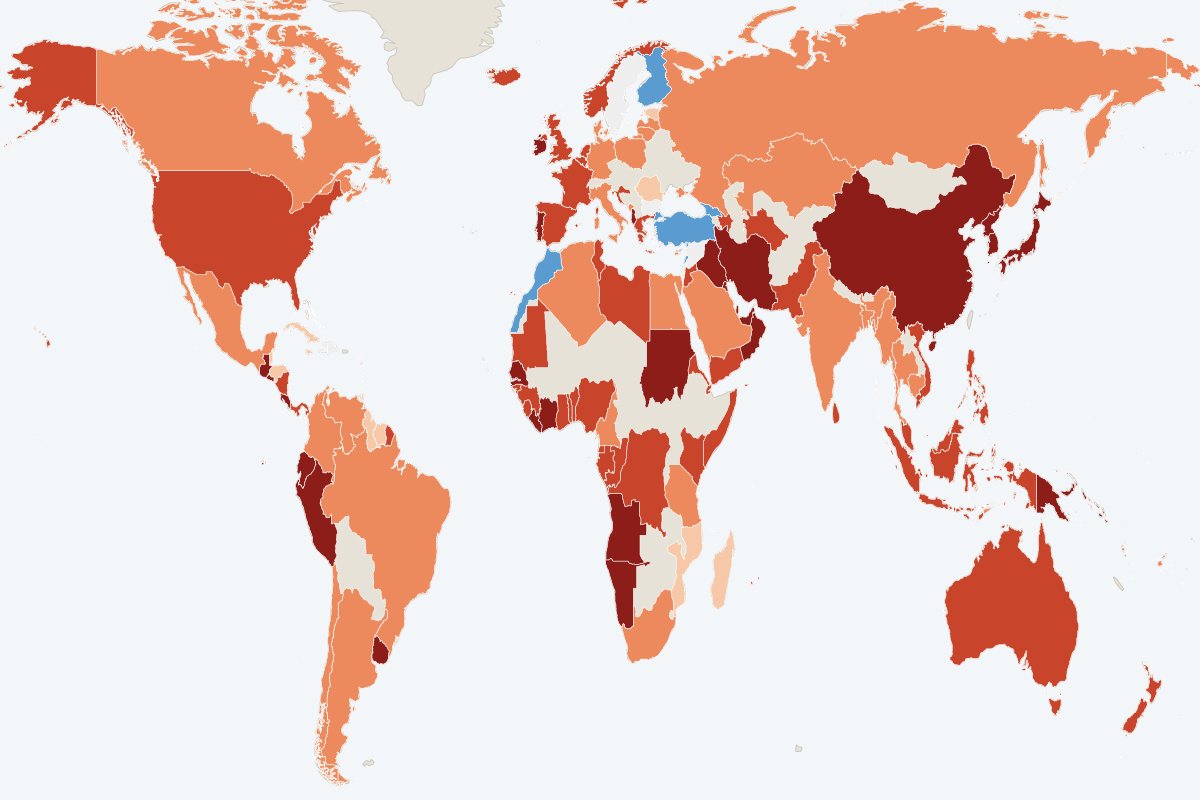
Projected change in the fish each country’s waters can hold by the 2090s under very high emissions: darker red means larger losses. Fish stocks on the move
- What is it?
- Warming shrinks the amount of fish the ocean can support and moves stocks towards the poles and across borders. Marine heatwaves can wipe out whole stocks within a year or two.
- How likely is it?
- Already under way: warming cut sustainable yields by 4% over 1930–2010. Models project about 5% less fish per degree of warming (medium confidence); cod fisheries and kelp forests can tip locally.
- What would it mean?
- Less food and income for coastal communities, lost licence revenue for small island states, and disputes over stocks that cross borders.
- What can be done?
- Limit warming, end overfishing, and adapt quotas and agreements as stocks move; protected and rebuilt stocks cope better.
The subpolar gyre: an anticlockwise loop of currents south of Greenland, with the winter sinking regions in the Labrador and Irminger Seas. North Atlantic cooling (subpolar gyre)
- What is it?
- A loop of currents south of Greenland where surface water sinks every winter, one of the engines of the Atlantic circulation.
- How likely is it?
- Possible this century: in a minority of climate models winter sinking shuts down within a decade. Threshold estimate about 1.8°C, with a wide range (1.1–3.8°C).
- What would it mean?
- Rapid regional cooling around the North Atlantic, shifts in European weather, and changes to fisheries.
- What can be done?
- Include abrupt regional cooling in European climate risk assessments, and keep the ocean observing arrays running.
Images: NOAA Coral Reef Watch (reefs, El Niño); NASA Blue Marble (ice sheets, Southern Ocean) with NOAA CoastWatch currents; circulation diagrams after Buckley and Marshall (2016). What can be done across all of them.
Where the risks fall
Regions where several of these changes meet, from the evidence on this site.
| Region | Ocean changes | Main sectors exposed |
|---|---|---|
| Sahel and West Africa | Monsoon drying after an Atlantic circulation collapse; El Niño | Rain-fed farming, water |
| South Asia | Monsoon drying after an Atlantic circulation collapse; sea-level rise in deltas | Farming, coastal cities |
| Small island states | Reef loss (94% of people live within 100 km of a reef); sea-level rise | Coastal protection, fisheries, tourism |
| Southeast Asia | Reef loss (half of the world’s reef fishers); sea-level rise | Fisheries, coastal assets |
| Southern Africa, Central America, Indonesia | El Niño droughts | Food, water, hydropower |
| Pacific coast of South America | El Niño marine heatwaves and coastal rains | Anchovy fishery, floods |
Tipping points in context
A tipping point is a level of warming beyond which a system keeps changing on its own, even if warming stops. The chart shows scientists’ best estimates of that level for five ocean and ice systems, against today’s warming of about 1.4°C. The estimates are wide ranges, based on models, observations and past climates.
Change starts before any threshold
Living coral cover has roughly halved since the 1950s, the ice sheets are losing ice ever faster, and the Atlantic circulation is very likely to weaken this century whether or not it tips. These gradual changes already matter for decisions.
What crossing a threshold means
Passing a threshold sets the direction, not the speed: reefs change within about a decade, the Atlantic circulation over decades to centuries, ice sheets over thousands of years. Bringing warming back down quickly can still limit the damage.
How to read the warnings
| When you read… | It means | Example |
|---|---|---|
| “Crossing a tipping point” | Warming has passed the level beyond which the system keeps changing on its own. It says nothing about how fast. | Warm-water coral reefs (Global Tipping Points Report 2025) |
| “Critically Endangered” | An ecosystem faces a very high risk of collapse within about 50 years. Much of it can still be alive today. | 122 of 127 shallow coral reef ecosystems (IUCN Red List of Ecosystems, 2026) |
| “Very likely”, “likely” | IPCC probability terms: very likely means 90–100%, likely means 66–100%. | The Atlantic circulation will very likely weaken this century |
| “Medium confidence” | How strong and consistent the IPCC judges the evidence to be, separate from probability. | Medium confidence that the Atlantic circulation will not collapse before 2100 |
| “Cannot be ruled out”, “low likelihood, high impact” | An outcome too uncertain to give a probability, but serious enough to plan for. | Sea-level rise approaching 2 m by 2100 (IPCC, 2021) |
| “A planetary boundary has been crossed” | Humanity has left the range considered safe for a stable Earth system. Risk rises; it is not a point of sudden change. | Ocean acidification (Planetary Health Check 2025) |