Coral reefs are the first large ocean system assessed as passing a tipping point. Close to a billion people live near them, and many coasts rely on them to break the waves.
- What is it?
- When the sea stays too hot for weeks, corals bleach and many die. Reefs now bleach more often than they can recover.
- How likely is it?
- Likely under way. Reefs are assessed as crossing their thermal tipping point, and IUCN classes 96% of reef ecosystems as Critically Endangered once projected warming is included.
- What would it mean?
- Weaker natural flood defences, and lost fish and income for many of the billion people who live near reefs.
- What can be done?
- Bring warming back towards 1.2°C and below; protect the reefs most likely to survive; plan for weaker natural defences.
Satellite observations, updated weeklyReviewed 24 October 2026
What we observe
Bleaching is becoming more frequent
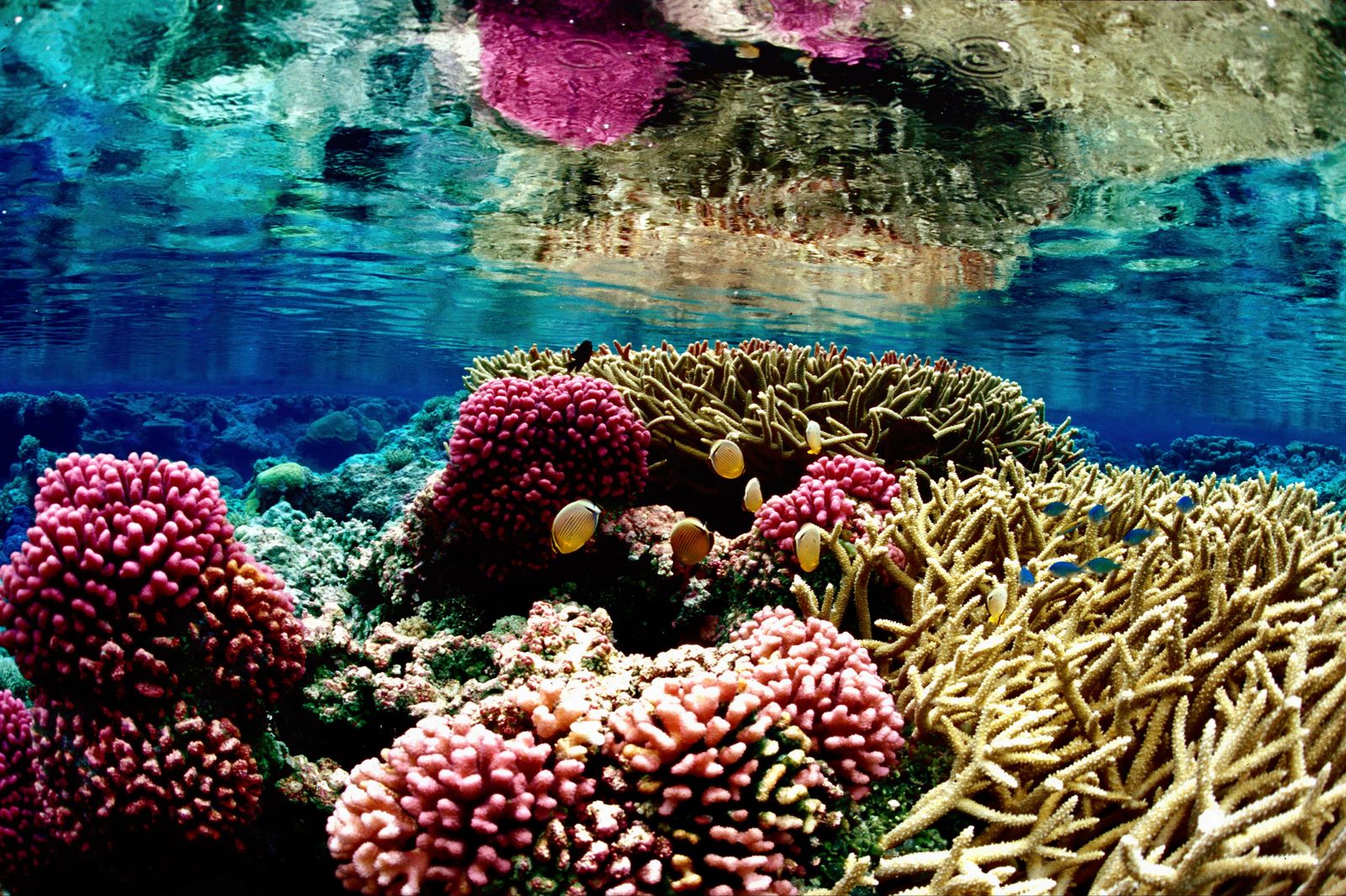
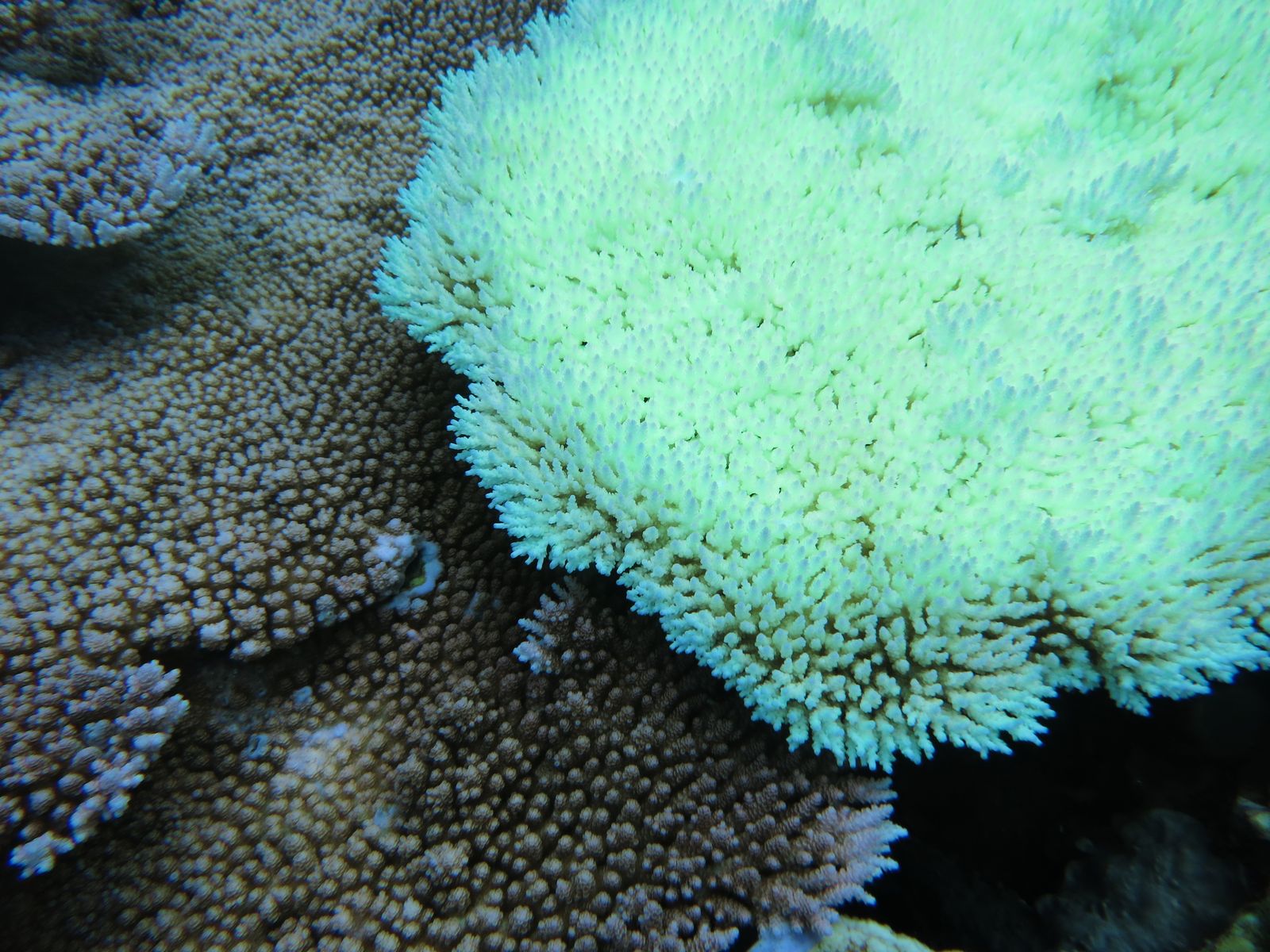
When the sea stays too warm for weeks, corals expel the algae that feed them and turn white. If the heat lasts, they die. NOAA has recorded four global bleaching events. In each, a larger share of the world’s reef area was exposed to heat strong enough to cause bleaching, and the gap between severe events has shrunk from 25–30 years in the early 1980s to about six (Hughes et al., 2018).
The fastest-growing corals need 10–15 years to recover. Reefs that bleach every few years do not get that time. Living coral cover worldwide has roughly halved since the 1950s (Eddy et al., 2021).


What could change
The thermal tipping point for reefs
The Global Tipping Points Report 2025 places the thermal tipping point for warm-water reefs at about 1.2°C of global warming, with a range of 1.0–1.5°C, and assesses that reefs are crossing it. Today’s warming is about 1.4°C. Reefs tip place by place, so some will last longer than others.
The IPCC projects a further 70–90% decline in reefs at 1.5°C of warming (high confidence) and more than 99% at 2°C (very high confidence). IUCN’s first global Red List of Ecosystems assessment, published in October 2026, classifies 122 of 127 shallow reef ecosystems (96%) as Critically Endangered: at very high risk of collapse within 50 years under intermediate emissions. On observed declines alone, without projected warming, the share would be 24%. IUCN stresses that most reefs still have living coral.
These warnings measure different things. The tipping point says warming has passed the level at which reefs as we know them can persist at large scale. The IPCC figures say how much reef is projected to be lost at each level of warming. The Red List rates the risk that each reef ecosystem collapses within 50 years. Together they say that most reefs are still alive, and that most are on course to be lost unless warming is brought back down.
How fast corals can adapt is debated, and some studies suggest more scope than the most-cited models (Klein et al., 2024). None suggests that today’s reefs can persist at 2°C.
Consequences for coasts
Coastal protection by reefs
Close to a billion people live within 100 km of a coral reef, in 117 countries; in small island states, 94% do (Sing Wong et al., 2022). A healthy reef removes on average 97% of the energy of incoming waves (Ferrario et al., 2014). If reefs lost their top metre of structure, a plausible result of degradation, expected annual flood damage on reef coasts would double, and damage from a 1-in-100-year storm would rise by 91% to US$272 billion (Beck et al., 2018).
In absolute terms the largest savings are in Indonesia, the Philippines, Malaysia, Mexico and Cuba. Relative to the size of their economies, small islands such as Belize, Grenada and the Bahamas depend most.
Land flooded by a 1-in-100-year storm on reef coasts
Global, today = 100
Very high emissions (RCP8.5). Beck et al. (2018), Nature Communications, CC BY 4.0.
Extra water depth over Caribbean reefs by 2100
Sea-level rise minus reef growth, range across Florida, Mexico and Bonaire
Projection Perry et al. (2025), Nature, doi:10.1038/s41586-025-09439-4, CC BY 4.0. Reefs 0–6 m deep in the tropical western Atlantic.
The two pressures compound. Dead reefs stop growing and start to erode just as the sea rises, so the water over them deepens and larger waves reach the shore. In the Caribbean, more than 70% of reefs are projected to be eroding by 2040, and at least 99% by 2100 if warming exceeds 2°C (Perry et al., 2025). Restoration can offset only a few tens of centimetres, and only with strong emission cuts.
Flood damage reefs prevent each year
Consequences for livelihoods
Fisheries, tourism and livelihoods
About 6 million people fish on coral reefs, half of them in Southeast Asia, and at least a quarter are gleaners collecting by hand for food (Teh et al., 2013). Tropical fish are rich in the calcium, iron and zinc that diets in many coastal countries lack (Hicks et al., 2019). Catch per unit of fishing effort on reefs has fallen by 60% since 1950, and reef-fish catches peaked in 2002 despite rising effort (Eddy et al., 2021).
Bleaching does not empty a fishery overnight. In the Seychelles, catches held up for two decades after the 1998 bleaching, but became less stable (Robinson et al., 2019). The larger loss comes when dead reefs collapse into rubble: fisheries productivity is then at least 35% lower (Rogers et al., 2018). Coral reef fisheries in the tropical Pacific could fall by 20% by 2050 under high emissions (Bell et al., 2013).
People who fish on coral reefs
Countries with more than 100,000 reef fishers, around 2010
Reef tourism as a share of the economy
Visitor spending linked to reefs, % of GDP, highest ten
Responses
What protection, restoration and planning can do
Limit warming
Temperature is the dominant driver. The Global Tipping Points Report concludes that warming must return below 1.2°C, and eventually towards 1°C, to keep functional reefs at meaningful scale. Every tenth of a degree avoided reduces how often and how badly reefs bleach. How much emissions must fall.
Protect and manage
Effective marine protected areas, clean water, sustainable fisheries and control of coral-eating starfish help reefs recover between heatwaves. They do little to stop bleaching itself: in 2016 on the Great Barrier Reef, water quality and fishing pressure made little difference to how much coral bleached (Hughes et al., 2017). Protection matters most for reefs that are coping better with heat. Switch on marine protected areas on the map above to see where they are, or see what protection can achieve worldwide.
Restore and adapt, with care
Restoration works at the scale of individual sites; the median project covers about 100 square metres (Boström-Einarsson et al., 2020) and it cannot be scaled up to replace global losses (Mulà et al., 2025). Breeding heat-tolerant corals shows promise in trials (Humanes et al., 2024) and remains experimental.
Plan for weaker natural defences
On reef coasts, flood defences, building codes and land-use plans should be tested against degraded reefs and higher seas. Communities that depend on reef fisheries and tourism face transitions that are easier to manage if planned early.
Which decisions should change
Act now
Long-lived, hard to reverse, and sensitive to the change: decide differently today.
- Do not rely on reefs as the only defence for coastal assets designed to last past mid-century; plan a fallback.
Assess now
High stakes but unclear answers: stress-test, monitor and set trigger points.
- Map which coasts lose protection as reefs degrade, and what hybrid or engineered defences would be needed.
- Plan the transition for communities that depend on reef fisheries and tourism.
Stay the course
Pays off whatever happens, or is cheap to adjust later: keep going.
- Reduce local pressures and protect and restore reefs where they can survive: it pays off now and buys time, though for a limited period.
The three decision types are Ocean Turning Points’ own lens, built on research on deciding under deep uncertainty. How to decide under uncertainty.
What this change means region by region and sector by sector
About these data
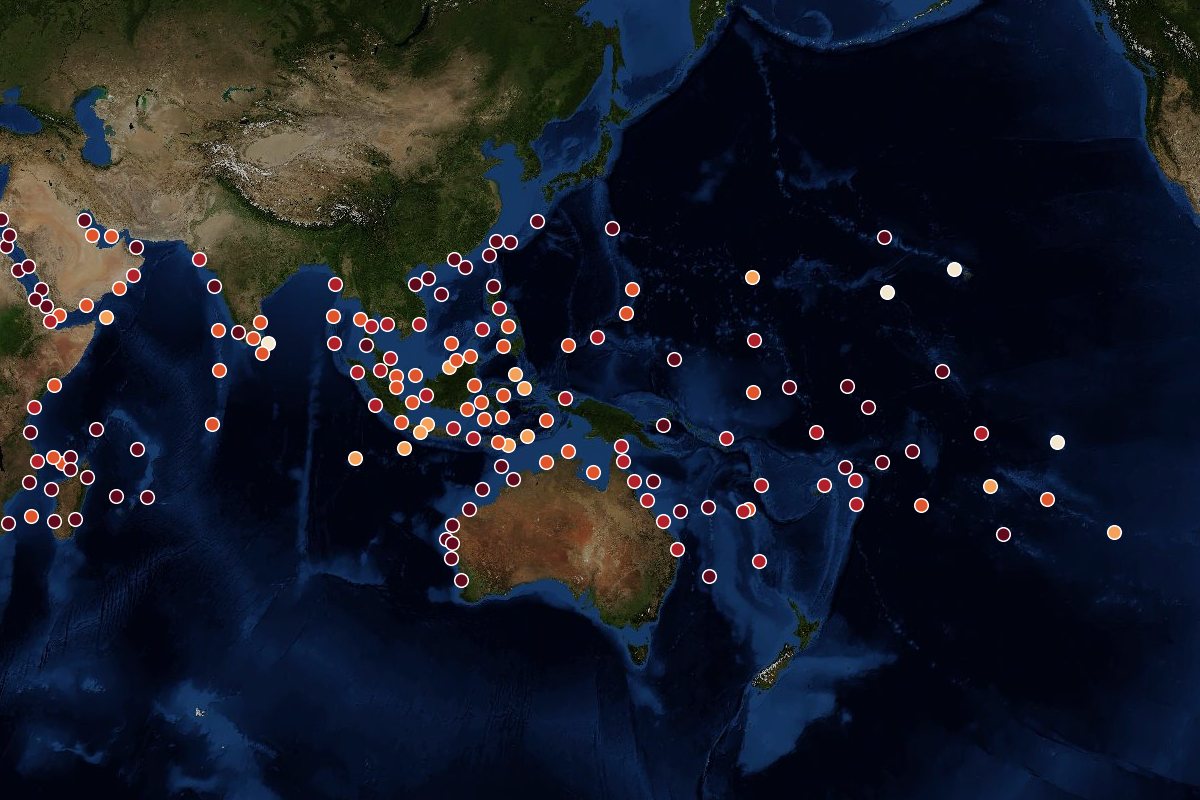
Heat stress at reef regions: NOAA Coral Reef Watch regional virtual stations, version 3.1, updated weekly (Skirving et al., 2020). Degree Heating Weeks add up how much, and for how long, the sea has been at least 1°C warmer than its usual warmest month over the past 12 weeks; 4 °C-weeks is roughly one month at 1°C above that level. NOAA treats 4 and 8 °C-weeks as the levels at which reef-wide bleaching, and bleaching with coral deaths, become likely. Use without restriction, with credit to NOAA Coral Reef Watch.
Marine protected areas: UNEP-WCMC and IUCN (2026), Protected Planet: The World Database on Protected and Conserved Areas (WDPCA), October 2026, Cambridge, UK: UNEP-WCMC and IUCN. Available at protectedplanet.net. Displayed through UNEP-WCMC’s map service; not redistributed. Bleaching events: NOAA (2026). Thresholds: Armstrong McKay et al. (2022) and the Global Tipping Points Report 2025. IUCN assessment: IUCN Red List of Ecosystems, October 2026. Coasts and livelihoods: Beck et al. (2018), Nature Communications 9; Perry et al. (2025), Nature 646; Ferrario et al. (2014), Nature Communications 5; Sing Wong et al. (2022), Global Change Biology 28; Teh et al. (2013), PLoS ONE 8; Spalding et al. (2017), Marine Policy 82; Hicks et al. (2019), Nature 574; Eddy et al. (2021), One Earth 4; Robinson et al. (2019), Nature Ecology & Evolution 3; Rogers et al. (2018), Journal of Applied Ecology 55; Bell et al. (2013), Nature Climate Change 3.