Decisions
How to decide when the future ocean is uncertain
Whether or when the Atlantic circulation collapses, and how fast the ice sheets melt, cannot be predicted. Decisions can still be made: choose actions that work across many possible futures, change now the decisions that would be expensive to get wrong, and plan when to look again.
Three kinds of decisionAdaptive pathwaysAvoiding lock-inNo-regret options
The decision lens
Three kinds of decision
No
Stay the course
Pays off whatever happens, or is cheap to adjust later: keep going.
Yes
Yes
Act now
Long-lived, hard to reverse, and sensitive to the change: decide differently today.
Not yet
Assess now
High stakes but unclear answers: stress-test, monitor and set trigger points.
This lens is Ocean Turning Points’ own synthesis. It builds on Hallegatte (2009) on no-regret options, flexibility and safety margins; on adaptive policy pathways (Haasnoot et al., 2013); and on matching the information to the decision (Hinkel et al., 2019).
Principles
Robust, adaptive and monitored
When experts cannot agree how likely different futures are, the best plan is the one that works acceptably across many of them, not the one tuned to a single forecast: “monitor and adapt” rather than “predict, then act” (Lempert et al., 2003; Marchau et al., 2019). Adaptive pathways put this into practice. Each action works until the change is too large for it, its adaptation tipping point (Kwadijk et al., 2010). The plan maps which action can follow which, and watches signposts so the next step is ready in time (Haasnoot et al., 2013).
- Adaptation tipping point: the action no longer meets its goal
- Switch to another action
- Trigger point: start preparing the next action
Stress-test against high-end outcomes
For long-lived, critical and hard-to-reverse decisions, use high-end scenarios, not central estimates (Hinkel et al., 2019).
Keep options open
Designs that can be raised, extended or staged are worth paying a little more for when the future is unclear (Haasnoot et al., 2019).
Link monitoring to decisions
Agree in advance which observations trigger a review, and move the trigger earlier if change speeds up.
In practice: London’s flood defences
The Thames Estuary 2100 plan monitors ten indicators that trigger decision points, which move earlier if the sea rises faster (Ranger et al., 2013). In 2023 the deadline for deciding how to replace the Thames Barrier was brought forward from 2050 to 2040; the 2026 review found sea level rising at 4.1 mm a year, in line with the plan (UK Environment Agency).
Act now
Avoiding lock-in
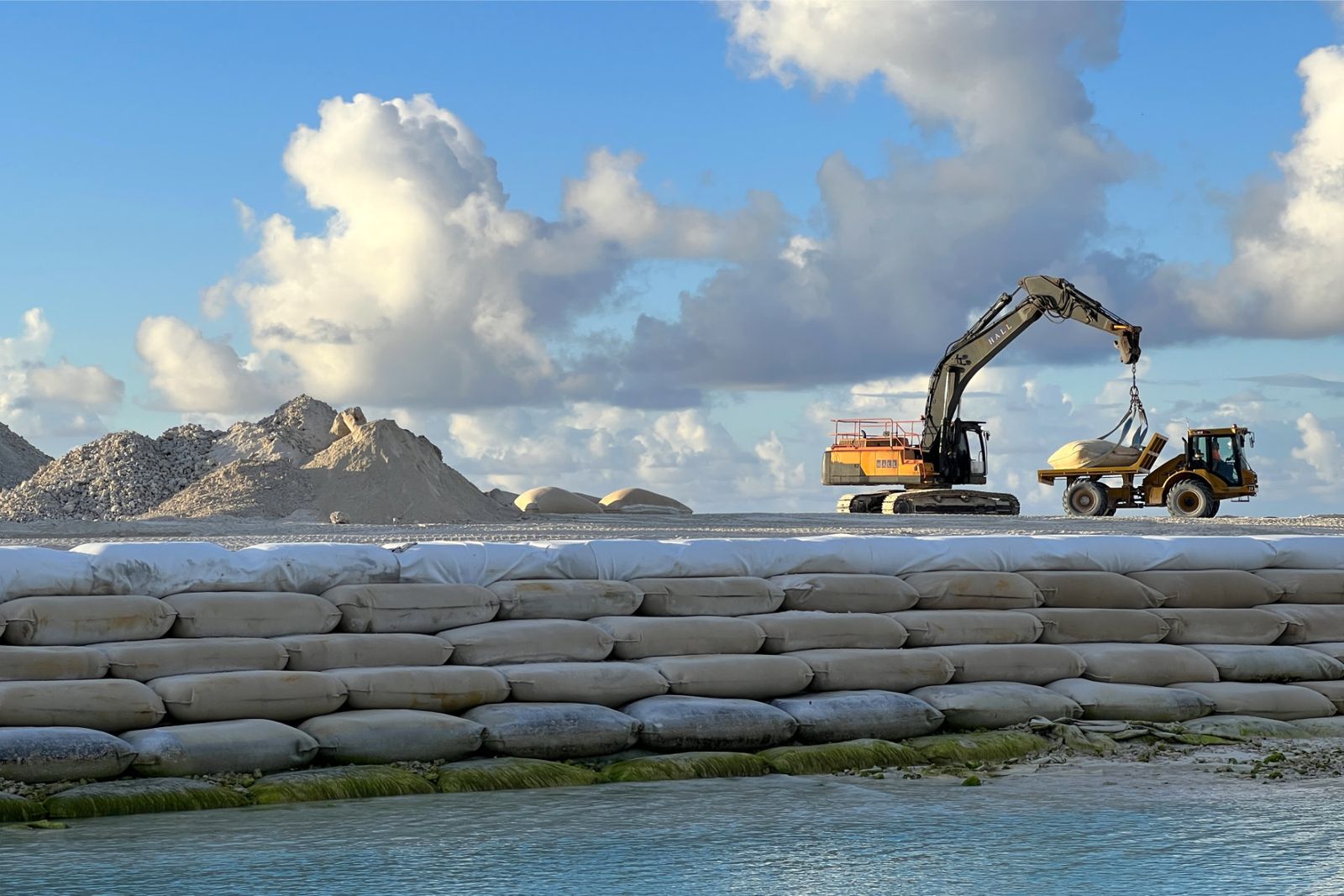
Some decisions made today will still stand when the ocean has changed a great deal. Actions focused on short-term gains can lock in vulnerability: seawalls reduce impacts now but can increase exposure later unless they are part of a long-term adaptive plan (high confidence; IPCC, 2022). Ignoring sea-level rise beyond 2100 leads to costly retrofits and stranded assets (Haasnoot et al., 2021).
Coastal setbacks, handled with care
Keeping new buildings back from the shore is among the cheapest adaptations, because nothing has been built yet. Setback zones could at least halve the exposure of new urban development in most EU countries by 2100 (Wolff et al., 2023). Moving existing communities is different: slow, costly and often inequitable, so where it may be needed the work on land, finance and consent has to start decades ahead, with the people affected (Siders et al., 2019; Haasnoot et al., 2021).

Stay the course
No-regret and low-regret options
- 4–36×the cost: estimated benefits of upgrading weather services and early warning in developing countries (Hallegatte, 2012).
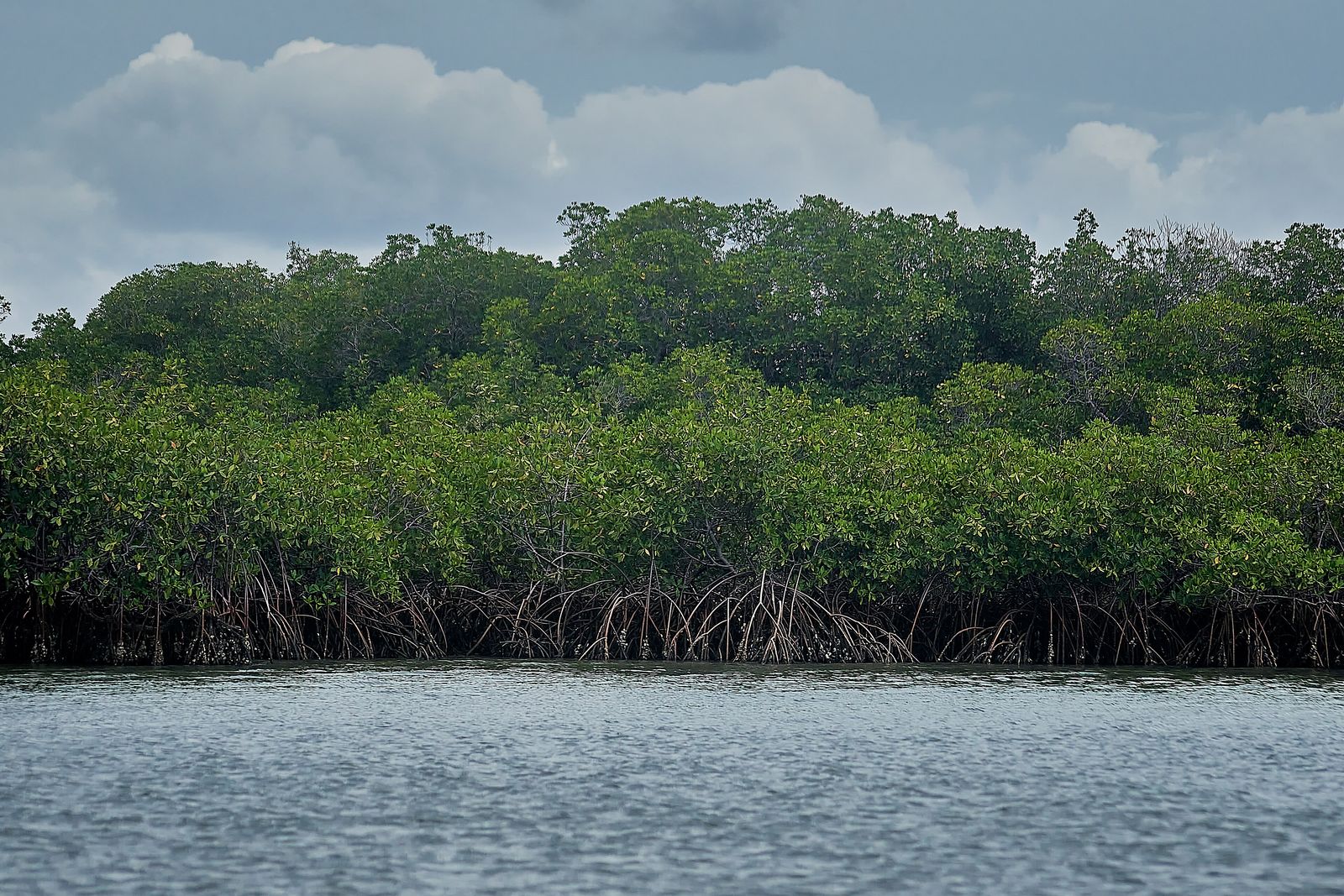
- 2–5×cheaper: salt marshes and mangroves compared with submerged breakwaters, for waves up to half a metre (Narayan et al., 2016).
- US$65bna year in flood damage averted by mangroves; reefs halve expected annual flood damage on reef coasts (Menéndez et al., 2020; Beck et al., 2018).
- 3.5×average benefit–cost ratio of nature-based coastal options on the US Gulf Coast, led by wetland and oyster-reef restoration (Reguero et al., 2018).
Early warning, social protection, risk finance, and protecting and restoring mangroves, reefs, marshes and fish stocks pay off across almost any future (IPCC, 2022). Protecting the ocean. They have limits: ecosystem-based adaptation loses effectiveness as warming rises (high confidence; IPCC, 2022), and it is no substitute for cutting emissions (Seddon et al., 2021).

Applying the lens
Decisions for each big change
Atlantic circulation (AMOC)Weakening very likely; collapse possible
Act now
- Long-lived assets designed now in exposed regions, such as water storage in the Sahel or ports on Atlantic coasts: build in margins or adjustability rather than sizing to the average projection.
- Keep the Atlantic observing arrays funded; a gap in the record cannot be made up later.
Assess now
- Screen which countries and portfolios are most exposed, and stress-test investments, design standards and climate finance against weakening and collapse scenarios.
- Link Atlantic monitoring to trigger points at which plans and standards are reviewed.
- Carry a collapse, and its carbon-cycle feedback, as an explicit scenario in carbon budgets.
Stay the course
- Drought-tolerant crops, efficient irrigation, social protection and early warning remain valuable whether or not the circulation weakens.
Coral reefs and heat bleachingTipping likely under way
Act now
- Do not rely on reefs as the only defence for coastal assets designed to last past mid-century; plan a fallback.
Assess now
- Map which coasts lose protection as reefs degrade, and what hybrid or engineered defences would be needed.
- Plan the transition for communities that depend on reef fisheries and tourism.
Stay the course
- Reduce local pressures and protect and restore reefs where they can survive: it pays off now and buys time, though for a limited period.
Ice sheets and sea-level riseAt risk since about 1°C of warming
Act now
- Avoid new development in low-lying land that will be exposed later this century; setback zones for new building are cheap now and costly later.
- Build seawalls only as part of a long-term adaptive plan, so they do not lock people into rising risk.
- Start the long lead-time work, on land, finance and consent, where pathways show relocation may be needed.
Assess now
- Find when current coastal strategies stop working, and test them against high-end sea-level rise.
- Monitor sea-level rise and Antarctic signals, with decision points that move earlier if the rise speeds up.
- Use upper-bound sea levels for decisions that are long-lived, critical and hard to reverse.
Stay the course
- Near-term protection, flood-proofing, early warning and beach nourishment to about 2050: sea level by mid-century differs little between emissions scenarios.
El Niño and the tropical PacificStrong El Niño now; extremes growing
Act now
- Agree forecast triggers, actions and pre-arranged finance before the next event, where they do not yet exist.
Assess now
- Test reservoir operating rules, food reserves, insurance and fisheries management against stronger and more frequent extreme events.
Stay the course
- Seasonal forecasts, early warning, forecast-based finance and social protection: proven tools that work under any El Niño future.
Fish stocks on the moveUnder way; less fish with every degree
Act now
- New or renegotiated fisheries agreements should include rules for stocks that move across borders.
Assess now
- Test port, processing and fleet investments that depend on particular stocks or fishing grounds.
- Plan nutrition and livelihoods where catches are projected to fall most.
Stay the course
- End overfishing, cut other pressures and diversify livelihoods: healthy stocks cope better with warming.
North Atlantic cooling (subpolar gyre)Possible this century; cooling within a decade
Act now
- Commit long-term funding for observations in the subpolar North Atlantic (OSNAP, Argo, Labrador Sea surveys): a gap in the record cannot be filled later.
Assess now
- Include abrupt regional cooling of several degrees in European and North Atlantic risk assessments.
- Test winter peak energy demand, heating standards and North Atlantic fisheries quota-setting against 2–3°C of regional cooling.
Stay the course
- Use decadal climate forecasts, which draw much of their skill from this region, in fisheries and seasonal energy planning.
A worked example
Planning for an Atlantic circulation collapse
Most adaptation is directionally robust: if the broad direction of change is known, well-aimed investments pay off even if they are imperfectly sized. A collapse of the Atlantic circulation is different, because it could reverse the direction of change in some regions, for example structurally drier West African monsoons. Further weakening is a planning concern this century; collapse should enter planning as an explicit stress test. Only two of 91 national adaptation plans mention the circulation at all (Jongman and Hall, forthcoming).
- Screen which countries and portfolios are most exposed: monsoon-dependent farming, Atlantic coasts, fisheries.
- Stress-test current investments, design standards and climate finance against weakening and collapse scenarios.
- Develop robust strategies that work with and without weakening, keeping options open even at somewhat higher cost.
- Connect monitoring to decisions, with thresholds at which plans and standards are reviewed.
- Reflect the risk in mitigation accounting, carrying a collapse and its carbon-cycle feedback as an explicit scenario.
Steps follow Jongman and Hall (forthcoming); Biesbroek et al. (2025) reach closely matching conclusions. Brenden Jongman is the curator of Ocean Turning Points. The Atlantic circulation.
Sources
Marchau, V. et al. (eds) (2019), Decision Making under Deep Uncertainty, Springer, doi:10.1007/978-3-030-05252-2; Lempert, R., Popper, S. & Bankes, S. (2003), Shaping the Next One Hundred Years, RAND; Hallegatte, S. (2009), Global Environmental Change 19, 240–247; Kwadijk, J. et al. (2010), WIREs Climate Change 1, 729–740; Haasnoot, M. et al. (2013), Global Environmental Change 23, 485–498; Haasnoot, M. et al. (2019), Climatic Change 161, 451–463; Haasnoot, M. et al. (2021), Climate Risk Management 34, 100355; Hinkel, J. et al. (2019), Earth’s Future 7, 320–337; Ranger, N. et al. (2013), EURO Journal on Decision Processes 1, 233–262; UK Environment Agency, Thames Estuary 2100 updates (2023) and 15-year monitoring review (2026); IPCC (2022), AR6 Working Group II Summary for Policymakers and Cross-Chapter Paper 2; Wolff, C. et al. (2023), Scientific Reports 13, 5515; Siders, A. R. et al. (2019), Science 365, 761–763; Hallegatte, S. (2012), World Bank Policy Research Working Paper 6058; Narayan, S. et al. (2016), PLoS ONE 11, e0154735; Menéndez, P. et al. (2020), Scientific Reports 10, 4404; Beck, M. W. et al. (2018), Nature Communications 9, 2186; Reguero, B. G. et al. (2018), PLoS ONE 13, e0192132; Seddon, N. et al. (2021), Global Change Biology 27, 1518–1546; Biesbroek, R. et al. (2025), Regional Environmental Change 25, 93; Jongman, B. & Hall, J. W. (forthcoming).